
Net Metering in Florida: How FPL & Duke Solar Buyback Works
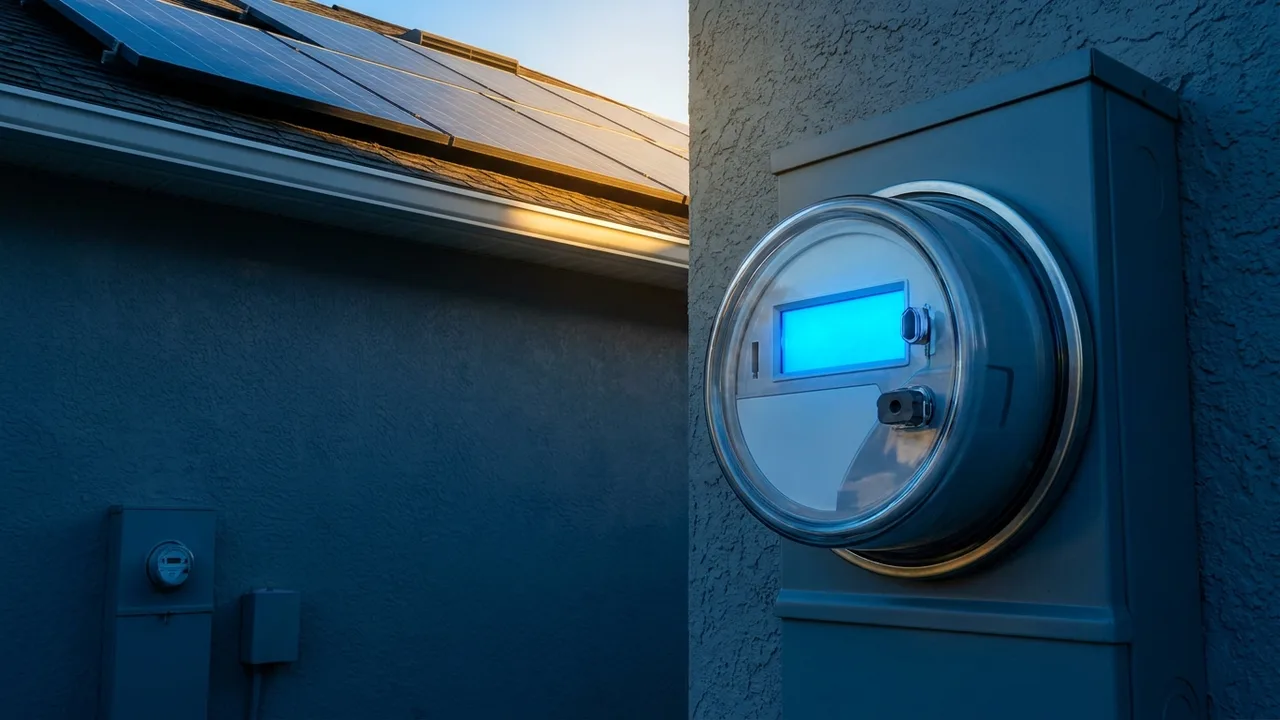
- Net metering credits the surplus electricity your panels push to the grid.
- FPL and Duke give a 1:1 retail-rate credit under current Florida PSC rules (as of 2026).
- Credits roll over each month; an annual true-up settles the balance once a year.
- You still pay fixed monthly charges even when credits cover your energy use.
- Underperforming or dirty panels mean fewer credits — production is the whole game.
Where the problem usually is
About three of four residential solar service calls trace back to the inverter or comms — not the panels themselves. That's why we run diagnostics first.
What is net metering and how does it work in Florida?
Net metering is the arrangement that makes rooftop solar worth it. During the day your panels often produce more power than your home is using — that surplus flows back onto the grid, and your utility credits your account for it. At night, or on a cloudy afternoon, you pull power back from the grid and those credits offset the cost.
In Florida, this runs through a bidirectional meter that tracks energy flowing both ways. Under the current Florida Public Service Commission framework, investor-owned utilities including FPL and Duke Energy credit that exported energy at the full retail rate — often called 1:1 net metering — rather than a lower wholesale rate. That's a meaningfully better deal than customers get in many other states, and it's a big reason Florida solar pencils out. (Net-metering rules are set by regulators and can change, so this reflects the setup as of 2026 for existing systems.)
How does FPL and Duke solar buyback credit your bill?
The mechanics are similar at both utilities, with small differences. Here's the general shape:
| How credits work | FPL & Duke (residential net metering) |
|---|---|
| Credit rate on exports | Full retail rate (1:1) under current rules |
| Monthly leftover credits | Roll over to the next month |
| Annual reconciliation | A yearly true-up settles remaining credits |
| Fixed monthly charges | Still billed (customer/base charge, etc.) |
In a big production month — say a bright, dry spring — you can bank more credits than you use and carry them forward. In a heavy-usage month, like a July with the AC running nonstop, you draw those banked credits down. Once a year the utility trues up the account: if you have surplus credits left over, they're typically settled at a lower avoided-cost rate, which is why oversizing a system way beyond your annual usage rarely pays. The goal is to match production to what your home actually consumes over the year.
Do you still get a power bill with solar in Florida?
Yes — almost always a small one. Even when your credits fully cover the energy portion of your bill, FPL and Duke still charge fixed monthly fees like the base customer charge, plus regulatory and taxes/fees line items. Being connected to the grid has a standing cost, and net metering doesn't erase it.
So the honest expectation isn't a zero-dollar bill every month; it's an energy charge that's largely or fully offset, with the fixed fees remaining. Homeowners sometimes call us worried their system "stopped working" because a bill showed up — when in reality the panels are fine and they're just seeing the normal fixed charges. If you want to rule out an actual production problem, that's a quick diagnostic check.
Why do underperforming panels cost you net-metering credits?
This is the part most articles skip, and it's exactly where a service company matters. Net metering only rewards the power you actually export. Every kilowatt-hour your array fails to produce is a credit you don't earn — and in Central Florida there are a lot of quiet ways production slips:
- Dirty panels. Pollen, dust, and hard-water residue can shave output by a few to several percent, and bird droppings can knock out whole sections of a panel.
- A faulted panel or optimizer that's dropped offline but hasn't triggered an obvious alarm.
- An inverter throwing an error and clipping or halting production entirely.
- Shading or debris after a storm.
A panel producing 10% under spec for a year is a year of net-metering credits you paid for and never collected. That's why keeping the array clean and verified isn't just maintenance — it directly protects the buyback you're counting on.
What happens to net metering when you sell or switch installers?
Two common questions. First, selling the home: the net-metering arrangement is tied to the utility account, so the new owner signs a fresh interconnection agreement and keeps the credit the system already qualifies for. We cover that fully in selling a home with solar in Florida.
Second, service: your net-metering deal is with FPL or Duke, not with whoever installed the panels. So if your original installer went out of business — which has happened to a lot of Florida homeowners — your credits are unaffected, and you're free to hire any independent company to keep the system healthy. We service every brand, any installer, so your production (and your credits) stay protected.
The most reliable way to make sure you're capturing every credit is an ongoing maintenance plan that keeps the panels clean and catches production drops early. We serve Ocala, Leesburg, The Villages, and all of Central Florida.
👉 Book a production check or call (407) 270-2542.
Frequently asked questions
Does FPL pay you for solar power in Florida?
Is net metering 1:1 in Florida?
Will I have a zero electric bill with solar?
What is a solar true-up in Florida?
Do dirty or broken panels affect my net-metering credits?
Serving solar owners across Central Florida
We clean, repair, maintain and protect solar systems throughout the region — any brand, any installer. Find your town:
Need a hand with your solar?
Service Solar Pros — any brand, any installer, across Central Florida. Call (407) 270-2542.
Get a free quote