Selling a Home With Solar in Florida: What to Know
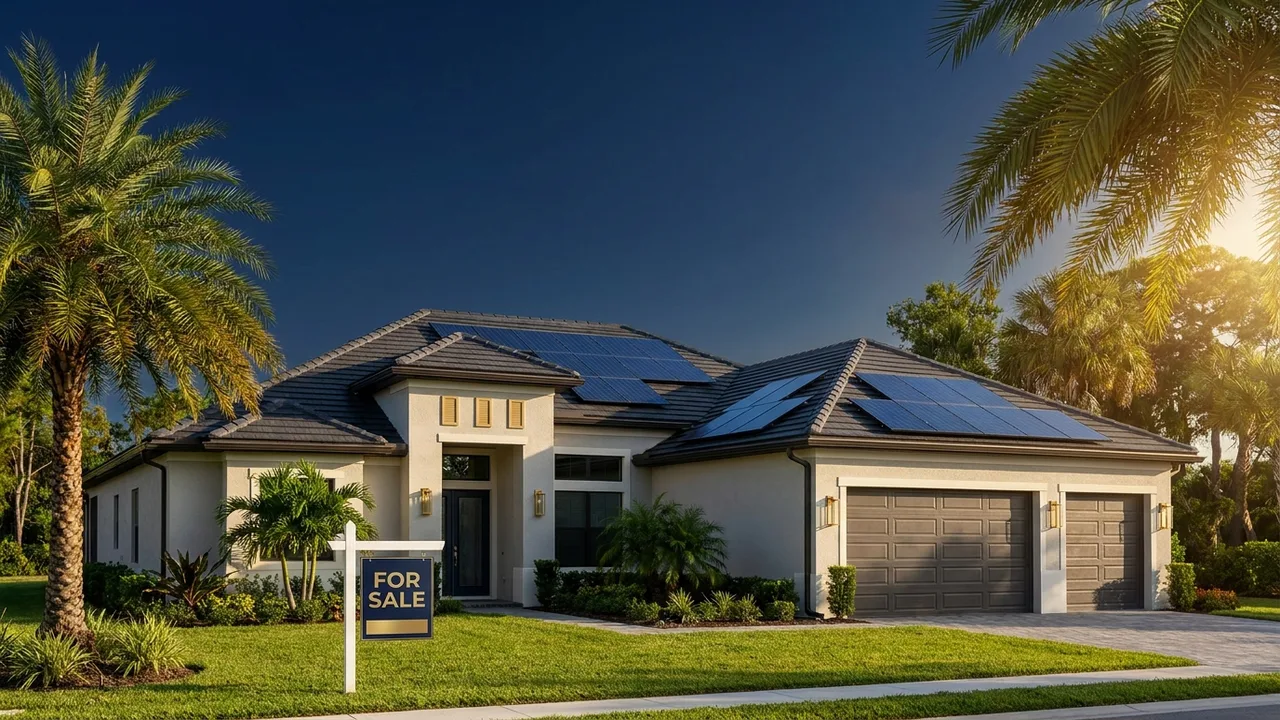
- Owned, paid-off solar generally adds value and transfers with the home at closing.
- Leased or loan-financed systems must be assigned to the buyer or paid off — sort this early.
- A pre-sale inspection, cleaning, and maintenance records reassure buyers and appraisers.
- Net metering and the interconnection agreement transfer to the new owner with the utility.
- If the roof is aging, a solar removal and reinstall before listing protects the sale.
Where the problem usually is
About three of four residential solar service calls trace back to the inverter or comms — not the panels themselves. That's why we run diagnostics first.
Does solar add value when selling a home in Florida?
When the panels are owned outright, solar usually helps. It lowers the buyer's future power bills, and in a state where summer AC runs the meter hard, that's a real selling point. Studies from Lawrence Berkeley National Laboratory and Zillow have long shown owned rooftop solar tends to sell at a modest premium over comparable homes without it, though the exact figure varies by market, system size, and age.
The catch is that a buyer only pays for what they can trust. A system that's dirty, throwing error codes, or has no paperwork behind it reads as a liability, not a perk. The difference between "nice, the bills will be lower" and "what am I inheriting here?" often comes down to how the system is presented — clean panels, a working monitoring app, and a folder of records.
What's the difference between selling owned, leased, and financed solar?
This is the single biggest thing that shapes your sale, so nail it down before you list. There are three common situations in Central Florida:
| Ownership type | What happens at closing |
|---|---|
| Owned / paid off | Panels are part of the property and transfer with the deed. Simplest case. |
| Loan-financed (balance remaining) | The loan is usually paid off from sale proceeds, or the buyer assumes it if the lender allows. A UCC lien or PACE assessment must be cleared or disclosed. |
| Leased / PPA | The buyer must qualify to assume the lease, or you buy it out. The leasing company has to approve the transfer. |
Two Florida-specific traps to watch: a PACE assessment (like the Ygrene-style programs common here) attaches to the property tax bill and can complicate financing for the buyer, and a UCC-1 fixture filing from a solar lender can cloud title if it isn't released. Get your loan or lease documents out early and ask your title company to check for both. Sorting this after a buyer is under contract is where deals stall.
Does net metering transfer to the new homeowner?
Yes, but it isn't automatic. The interconnection agreement and net-metering arrangement are between the utility and the account holder, so the new owner typically signs a fresh agreement when they set up service. With FPL and Duke Energy, the incoming homeowner keeps the same 1:1 retail credit the system already qualifies for under current Florida Public Service Commission rules — the panels don't lose their grandfathered status just because the house changed hands (rules can change, so this reflects the arrangement as of 2026).
Practically, that means the buyer contacts the utility to transfer the account and confirm the net-metering setup carries over. It's a good idea to leave the buyer a copy of the original interconnection paperwork. We break down how the credits themselves work in our Florida net metering guide.
Should I fix or clean my solar before listing?
Almost always, yes — and it's one of the cheapest pre-sale improvements you can make. A home inspector or a curious buyer will pull up the monitoring app or climb up for a look, and anything wrong becomes a negotiating chip against you. Before you list, it's worth handling:
- A cleaning. Florida pollen, hard-water spray-off, and bird droppings dull output and, frankly, make panels look neglected. A professional cleaning fixes both.
- A quick inspection. Confirm every panel is producing, the inverter is fault-free, and connections are sound. If something's off, our repair service handles it before it becomes a closing headache.
- Critter check. Birds and squirrels nesting under the array are common here, and a buyer's inspector will flag chewed wiring. Critter guard closes the gap.
A clean, verified system with a recent service report tells a buyer "this works and someone cared for it." That's worth more than the few hundred dollars it costs.
What about the roof under the panels?
Here's the one a lot of Florida sellers miss. Buyers — and their insurers — care a lot about roof age, and panels sit right on top of it. If your roof is near the end of its life, a buyer may worry they'll have to pay to remove and reinstall the array just to replace shingles a few years after moving in. That fear can shave real money off your offer or scare a buyer off entirely.
If the roof is aging, it's often smarter to handle the roof before listing, which usually means a professional solar removal and reinstall around the new roof. You sell a home with a fresh roof and working solar — a much stronger listing. We cover the timing and cost tradeoffs in solar panels and a new roof. Whatever you decide, don't let a buyer's inspector be the first person to raise the roof-age question.
How do maintenance records help the sale?
Documentation quietly does a lot of the selling for you. Hand a buyer a folder — or a shared drive — with the install paperwork, the interconnection agreement, warranty documents, and a history of cleanings and inspections, and you've turned a mystery system into a known quantity. Appraisers can also weigh a well-documented, functioning system more confidently than one with no paper trail.
This is where an ongoing solar maintenance plan pays off twice: it keeps the system producing while you own it, and it generates exactly the dated service records that reassure a buyer. Every job we do comes with before-and-after photos, so there's visible proof the array was cared for.
We help sellers across The Villages, Leesburg, and all of Central Florida get their solar sale-ready — any brand, any original installer.
👉 Book a pre-sale solar check or call (407) 270-2542.
Frequently asked questions
Does solar increase home value in Florida?
Can you sell a house with leased solar panels?
Does net metering transfer to a new owner in Florida?
Should I replace my roof before selling a house with solar?
What paperwork should I give a buyer of a solar home?
Serving solar owners across Central Florida
We clean, repair, maintain and protect solar systems throughout the region — any brand, any installer. Find your town:
Need a hand with your solar?
Service Solar Pros — any brand, any installer, across Central Florida. Call (407) 270-2542.
Get a free quote