Solar Panel Maintenance Checklist (What a Pro Actually Inspects)
- Split the work: simple ground-level DIY checks plus one professional inspection a year.
- DIY: watch monitoring for declines, look for soiling, shading, and critters, listen to the inverter.
- Pro: inverter health, torque and corrosion on connections, wiring, racking, and roof seals.
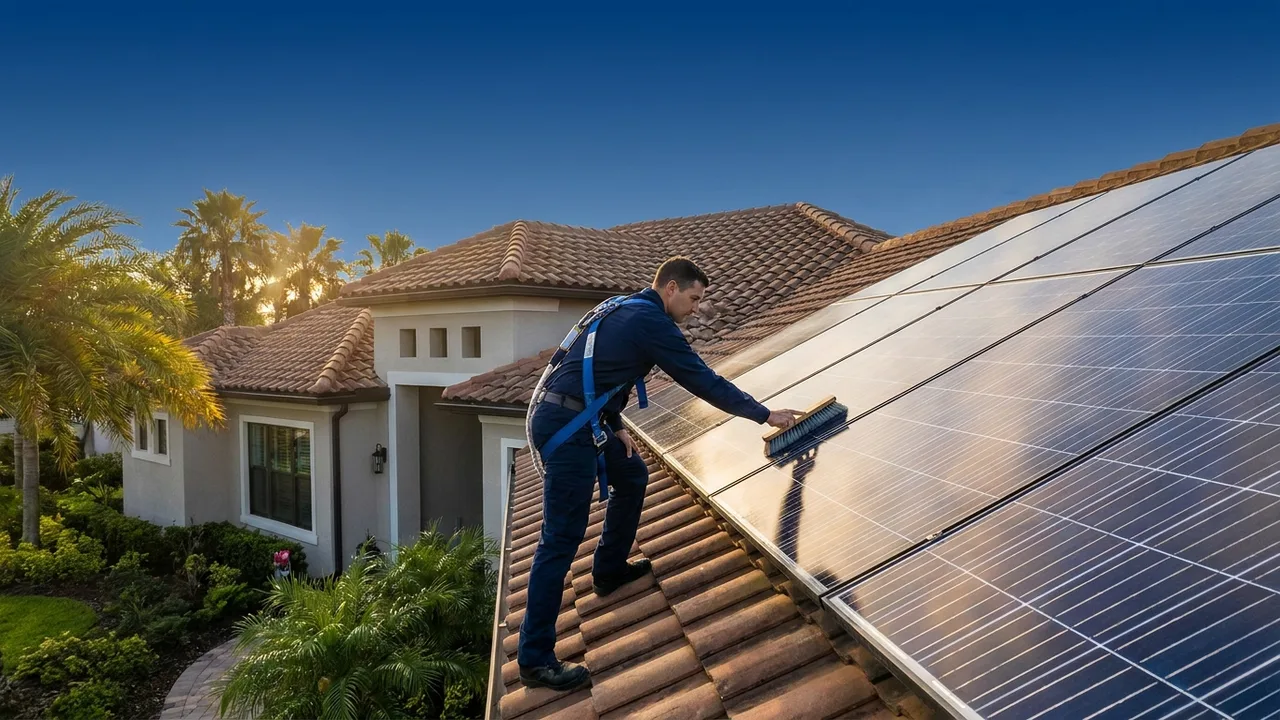
- Add cleaning once or twice a year for Florida pollen, lovebugs, and bird droppings.
- Time an inspection before June 1 so your system's storm-ready for hurricane season.
Where the problem usually is
About three of four residential solar service calls trace back to the inverter or comms — not the panels themselves. That's why we run diagnostics first.
The two halves of a solar maintenance checklist
A good routine splits clean into two parts: the simple checks you can safely do yourself from the ground, and the annual professional inspection that covers everything needing roof access or electrical testing. Do the first regularly, book the second once a year, and you'll catch almost anything while it's still small and cheap.
This checklist is part of our solar maintenance and repair guide. For the why behind it, see do solar panels need maintenance.
DIY checks you can do from the ground
None of these need you climbing on the roof — that's the whole point:
- Watch your monitoring. Check the app monthly for a downward trend against the same season last year. A slow slide can mean soiling; a sudden drop means a fault.
- Look for soiling. From the yard, is the glass filmy, dusty, or streaked with droppings?
- Check for new shading. Trees grow. A branch that now shades panels in the afternoon quietly costs you output.
- Scan for critters. Birds ducking in and out under the array, nesting material, or droppings on the ground below are all warning signs.
- Glance at the inverter. Green light, no error, no loud buzzing or hot smell.
If any of that looks off, note it for your next professional visit — or call sooner if it's a sudden production drop. See why did my solar panels stop producing.
What a professional inspects each year
The annual visit is where the real protection is. A technician checks the items you can't safely reach or test:
- Inverter health. Fault and error history, temperature, and firmware.
- Electrical connections. Torque and corrosion at combiner boxes, disconnects, and connectors — loose or corroded joints are a leading cause of failure and fire risk.
- Wiring and conduit. Cracked insulation, UV damage, sagging cable, and rodent chewing.
- Racking and mounting. Bolt tightness and any movement, which matters a ton before storm season.
- Roof penetrations and seals. Signs of leaks or failing flashing where the mounts meet the roof.
- Hot spots. Thermal or visual signs of localized overheating — see solar panel hot spots explained.
- Monitoring. Confirming the data's accurate and reporting.
The Florida seasonal add-ons
Central Florida earns a few extra items on the calendar:
- Cleaning once or twice a year. Spring pollen and the spring and fall lovebug swarms leave a sticky film that rain won't take off.
- A pre-hurricane-season check before June 1. Confirm the racking's tight, the connections are sound, and any battery backup actually transfers — you don't want to find out during a storm.
- A post-storm look after any major weather. Check for shifted panels, damaged wiring, or a dropped inverter.
Timing the inspection for late spring knocks out both the pollen cleanup and the hurricane prep in one visit.
How often should each item happen?
A simple cadence that keeps it manageable:
- Monthly: glance at monitoring for trends.
- Seasonally: a ground-level look for soiling, shading, and critters.
- Once or twice a year: professional cleaning.
- Annually (ideally late spring): full professional inspection.
- After any major storm: a quick damage check.
A maintenance plan handles the professional side automatically, so the annual inspection and cleaning just happen on schedule and nothing slips.
Let us handle the checklist for you
We'll run the full professional inspection, clean the array, and give you written findings with photos — any brand, any installer. If anything needs fixing, we diagnose before we quote through our repair service. We serve Lady Lake and all of Central Florida. Request a free quote or call (407) 270-2542.
Frequently asked questions
What should be on a solar panel maintenance checklist?
How often should I have my solar panels professionally inspected?
What can I check on my solar system myself?
When should I do solar maintenance in Florida?
Why do professionals check electrical connections?
Serving solar owners across Central Florida
We clean, repair, maintain and protect solar systems throughout the region — any brand, any installer. Find your town:
Need a hand with your solar?
Service Solar Pros — any brand, any installer, across Central Florida. Call (407) 270-2542.
Get a free quote