
Solar Inverter Red Light & Error Codes: What They Mean
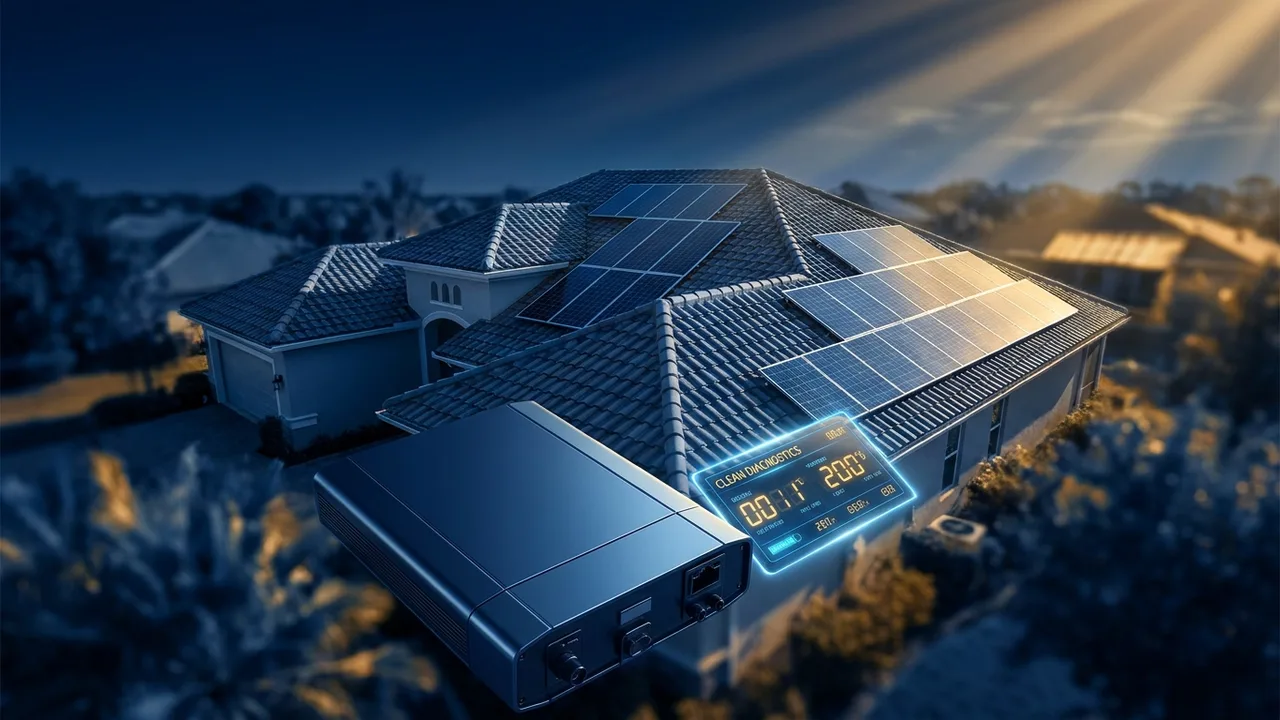
- Green light = normal; red or amber = a fault that has stopped or throttled production.
- Common faults: grid/AC fault, over-voltage, ground or isolation fault, arc fault, comms loss.
- Enphase shows status in the app and on the IQ Gateway; SolarEdge shows codes on the inverter screen and app.
- Never keep resetting a ground or arc fault — it can be flagging a real safety issue.
- Florida lightning and grid swings set off transient faults; a code that keeps coming back needs a diagnostic.
Where the problem usually is
About three of four residential solar service calls trace back to the inverter or comms — not the panels themselves. That's why we run diagnostics first.
What does a red light on my solar inverter mean?
The inverter is the brain of the system, and its status light is the fastest read you've got on its health. Green means it's running normal. A red or amber light — solid or flashing — means it faulted and either stopped producing or dropped to reduced output. A flashing light can also just mean it's booting up in the morning or flagging a warning, so what it means depends on the brand and the code behind it.
Here's the key thing: the light is a symptom, not a diagnosis. Behind it is a specific error code that tells a technician what actually happened. This one's part of our broader solar maintenance and repair guide, and it pairs close with why did my solar panels stop producing.
The most common solar inverter error codes
Whatever the brand, most faults fall into a handful of families:
- Grid or AC fault — the utility voltage or frequency drifted outside the safe window, so the inverter disconnected. Common after a flicker or an outage.
- Over-voltage — grid voltage is running high, which happens on long circuits or during light-load conditions. The inverter throttles or shuts off to protect itself.
- Ground fault or isolation fault — current is leaking where it shouldn't, often from moisture getting in or damaged wire insulation. This one matters for safety.
- Arc fault (AFCI) — the inverter picked up an electrical arc, usually a loose or corroded connection.
- Communication fault — the inverter's fine but it lost its data link, so monitoring goes blank.
Some of these, like a brief grid fault, clear themselves once things settle. Others — ground and arc faults especially — should never get repeatedly reset.
Enphase microinverter status and fault lights
Enphase systems don't have one big inverter — every panel has its own microinverter, and the IQ Gateway (used to be called the Envoy) gathers up their status. You read faults in the Enphase app, not on a screen. A microinverter that's failed or lost communication shows up as one panel offline while the rest keep producing, so you get a partial drop, not a total blackout. A red LED on the gateway itself usually points to a power or communication problem with the gateway, not the panels.
Because each unit is independent, an Enphase fault is often isolated to a single microinverter — cheaper to deal with than a whole-inverter failure, but it still takes a proper diagnosis to confirm which unit and why.
SolarEdge inverter error codes
SolarEdge runs one central inverter with power optimizers on each panel. The inverter has a screen and status LEDs, and it reports numbered error codes plus a description in the mySolarEdge app and monitoring portal. The frequent ones are grid-related errors (voltage or frequency out of range), isolation or ground faults, and optimizer communication errors where the inverter can't see one or more panels.
A single optimizer dropping off looks like reduced output; an inverter-level fault stops the whole system. Same as Enphase — a transient grid code may clear, but a repeating isolation or arc code is telling you something real is wrong.
Which faults can I clear myself, and which need a pro?
Safe to try once: if the code is grid-related and the light went red right after a storm or outage, you can power-cycle the inverter following its manual (typically AC off, DC off, wait, then reverse). If it comes back green and stays green, the grid event was your cause.
Don't keep resetting: a ground fault, isolation fault, or arc fault points at moisture, damaged wiring, or a bad connection — real conditions that can get worse or become a fire risk. Clearing them over and over just hides the problem instead of fixing it. Same goes for any code that comes back within minutes of a reset.
The Florida angle: lightning, heat, and grid swings
Central Florida is the lightning capital of the United States, and our summer storm season sends voltage spikes and grid flickers through neighborhoods just about daily. That sets off a lot of transient grid and over-voltage faults that clear themselves once the grid settles — annoying, but not damage.
The flip side: repeated surges and relentless heat wear inverter electronics faster here than in milder places, and the humidity drives those moisture-related isolation faults. So down here, a one-time red light after a storm is often nothing. But a code that keeps coming back deserves a look before it turns into a dead inverter. We service inverters across Orlando and the counties around it.
When to call for an inverter diagnostic
Call a pro when a fault won't clear after one power cycle, when you see a ground, isolation, or arc fault, when the same code keeps coming back, or when you flat out can't tell what the code means. We read the fault history, test the strings and connections, and confirm the real cause before we quote a thing — any brand, any installer, even if your original company is gone. Start with a professional inverter diagnostic, request a free quote, or call (407) 270-2542.
Frequently asked questions
What color should my solar inverter light be?
Can I reset my solar inverter myself?
What is a ground fault or isolation fault on a solar inverter?
Why does only one of my solar panels show as down?
Do Florida storms cause inverter error codes?
Serving solar owners across Central Florida
We clean, repair, maintain and protect solar systems throughout the region — any brand, any installer. Find your town:
Need a hand with your solar?
Service Solar Pros — any brand, any installer, across Central Florida. Call (407) 270-2542.
Get a free quote