How Long Do Solar Panels Last? Degradation Explained
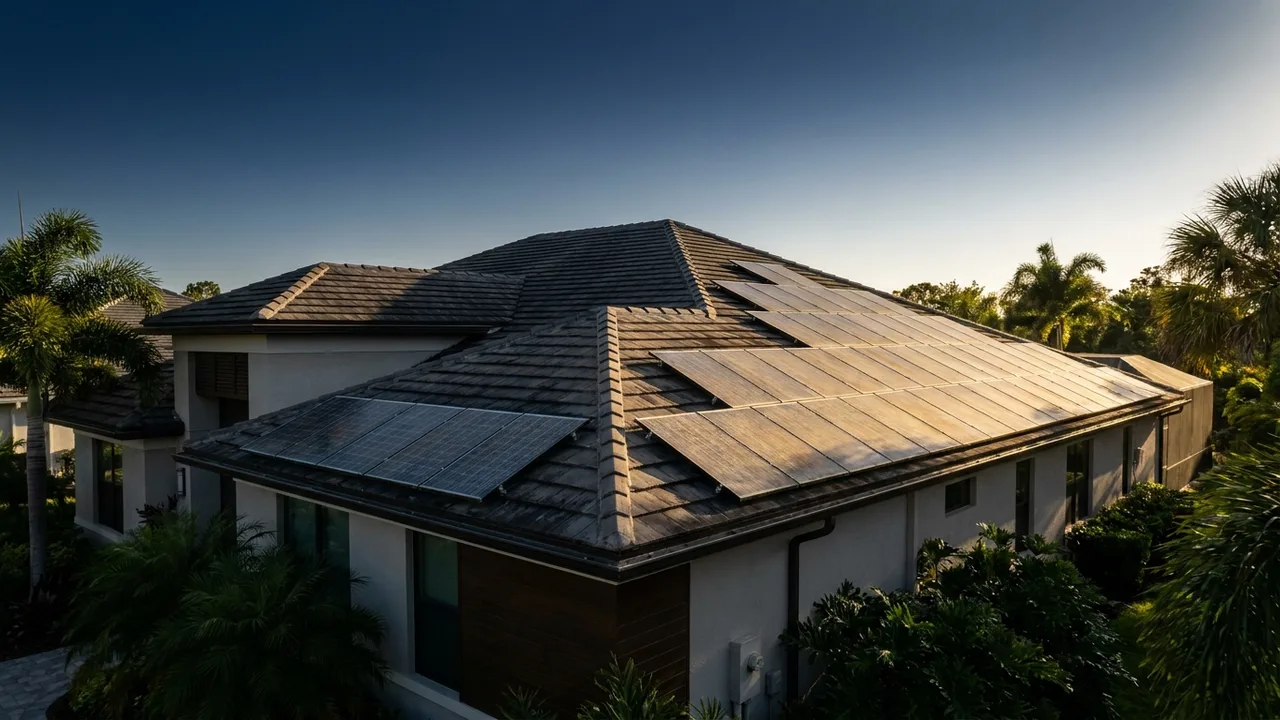
- Panels typically last 25-30+ years — they fade, they don't suddenly die.
- NREL finds a median degradation rate near 0.5% output loss per year.
- A 25-year performance warranty usually guarantees ~80-87% of original output.
- Florida's heat and humidity can nudge degradation slightly faster than average.
- Cleaning, shade control, and catching faults early protect long-term output.
Where the problem usually is
About three of four residential solar service calls trace back to the inverter or comms — not the panels themselves. That's why we run diagnostics first.
How long do solar panels last?
The short answer: 25 to 30 years or more of useful life for the panels themselves. That 25-year figure gets quoted so often people assume the panels switch off on their anniversary — they don't. A panel at year 26 is still generating power; it's just producing a bit less than it did new. Plenty of arrays keep running productively well past 30 years.
What usually needs attention sooner is the supporting hardware. Inverters often have a shorter service life than the panels — string inverters commonly get replaced somewhere around the 10-15 year mark, while microinverters tend to last longer. So over a 30-year system life, expect the panels to go the distance and budget for an inverter swap or two along the way.
What is solar panel degradation and how fast is it?
Degradation is the slow, natural decline in how much electricity a panel produces as it ages — driven by UV exposure, heat cycling, and normal weathering of the cells and materials. It's gradual and predictable, not a sudden drop.
The most-cited data comes from the National Renewable Energy Laboratory (NREL). Their long-running analysis of thousands of systems (Jordan & Kurtz) found a median degradation rate around 0.5% per year, with better modern panels often doing a bit better. Here's what that looks like over time at a 0.5% annual rate:
| Panel age | Approx. output retained (at ~0.5%/yr) |
|---|---|
| Year 1 | ~99% (after initial break-in) |
| Year 10 | ~95% |
| Year 20 | ~90% |
| Year 25 | ~87-88% |
| Year 30 | ~85% |
That's why the standard 25-year performance warranty typically guarantees somewhere around 80-87% of original output at year 25 — the manufacturer is building in a small buffer over the expected ~0.5%/year curve. If your system is losing power a lot faster than this, something's wrong, and it's worth investigating rather than accepting.
Does Florida's climate make panels degrade faster?
A little, yes — and it's an angle worth understanding if you own solar in Central Florida. Degradation is driven partly by heat, and NREL's own data shows hotter climates tend to sit at the faster end of the degradation range. Our relentless sun, high roof temperatures, and humidity all add mild stress compared to a cool, dry climate.
The important word is mild. We're talking about a modest nudge — maybe the difference between a 0.5% and a slightly higher annual rate — not panels wearing out in ten years. But it stacks with the other Florida realities that rob output without touching the panel's health at all: pollen film, hard-water spotting, and bird droppings can quietly cost you several percent of production. That loss looks exactly like degradation on your bill, but it's completely reversible with a cleaning. We cover it in do dirty solar panels lose efficiency.
How do you know if your panels are degrading normally?
You watch the trend, not a single reading. Compare this year's production to prior years for the same season using your monitoring app or utility bills. A slow, steady decline of roughly half a percent a year is normal aging. What's not normal:
- A sudden step-down in output (points to a failed panel, optimizer, or inverter, not degradation).
- A faster-than-expected slide — losing several percent a year.
- One string or section producing far less than the rest.
These usually mean a fault or a soiling problem, both fixable. The trouble is that gradual losses hide well — homeowners often chalk up a real, repairable problem to "the panels just getting old" and leave money on the table for years. If your numbers are sliding faster than the chart above, a diagnostic and repair check can tell you whether it's genuine degradation or something worth fixing. Our guide on why panels stop producing covers the common culprits.
How can you make solar panels last longer?
You can't stop aging, but you can protect the output you paid for and make sure you actually get the full 25-30 years. What helps most in Central Florida:
- Keep them clean. Regular professional cleaning removes the pollen, dust, and hard-water residue that mask real output and, over time, can etch glass.
- Keep critters out. Birds and squirrels nesting under the array chew wiring and foul panels — critter guard prevents the damage that ends a panel's life early.
- Catch faults early. A shaded, cracked, or hot-spotting panel drags down its neighbors; addressing it protects the whole string.
- Service the inverter and connections so the balance-of-system keeps pace with the panels.
The simplest way to cover all of it is a maintenance plan — scheduled cleaning and inspection that keeps output high and catches small problems before they shorten the system's life. We service every brand, any original installer, across The Villages, Leesburg, Ocala, and all of Central Florida.
👉 Book a system health check or call (407) 270-2542.
Frequently asked questions
How long do solar panels last?
How much do solar panels degrade per year?
Do solar panels degrade faster in Florida?
How do I know if my solar panels are wearing out?
Can you make solar panels last longer?
Serving solar owners across Central Florida
We clean, repair, maintain and protect solar systems throughout the region — any brand, any installer. Find your town:
Need a hand with your solar?
Service Solar Pros — any brand, any installer, across Central Florida. Call (407) 270-2542.
Get a free quote