
Solar Batteries & Backup Power in Central Florida: A Homeowner's Guide
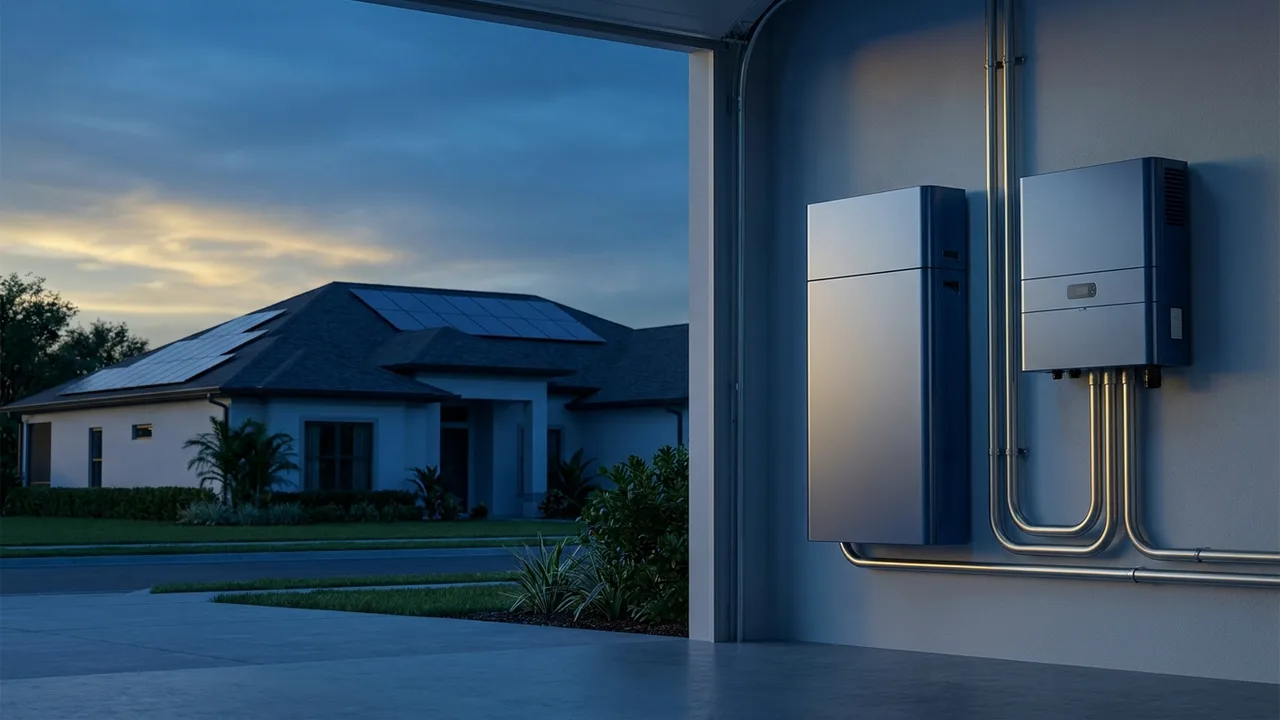
What one ~13.5 kWh battery typically backs up
Approximate runtimes — your real numbers depend on your load, and a 3–5 kW inverter caps how much runs at once. We size and test it for your home.
Do solar panels keep the lights on during a power outage?
This is the question I get more than any other around here, and the honest answer catches people off guard: a standard grid-tied solar system with no battery shuts down the second the grid goes out — even at noon on a bluebird day. It's not broken. It's a safety rule. Your inverter has to stop pushing power so it can't back-feed the lines and hurt a utility crew working to bring the grid back. That automatic shutoff has a name — anti-islanding.
The only way solar keeps your house alive in a blackout is with a battery and a backup-capable inverter or gateway. The battery holds the energy, and when the grid drops, an automatic transfer switch islands your home so your panels and battery can safely run your circuits. I lay the whole thing out in will solar work during a power outage in Florida.
How does solar battery backup actually work?
Picture three pieces working as a team. Your solar panels make DC power. A battery — a Tesla Powerwall, Enphase IQ Battery, or Generac PWRcell — banks the extra energy your home doesn't burn through during the day. And a backup gateway and transfer switch keeps an eye on the grid; the moment utility power fails, it cuts your home loose from the grid in a fraction of a second and runs the house off the battery — and your panels too, if the sun's up.
When the grid comes back, it all reconnects on its own and tops the battery back up. Most folks never lay a finger on it, and that's exactly why the setup has to be dialed in and looked after. A gateway running old firmware, or a battery that's quietly lost capacity, can leave you sitting in the dark at the worst possible moment.
Why does battery backup matter so much in Central Florida?
We live in the lightning capital of the United States, and the Atlantic hurricane season runs June 1 through November 30 (NOAA). Between named storms, those daily afternoon thunderstorms, and a local grid that isn't getting any younger, outages here aren't some rare event — they're a seasonal sure thing. If your home's got medical equipment, a well pump, or just a fridge full of food, a battery is the line between a hassle and a real problem.
Here's the catch: a battery only helps if it works when you actually need it — mid-storm, when nobody's picking up the phone. That's why I push every backup owner in Leesburg, The Villages, Ocala, Clermont, and across Central Florida to test and service the system before hurricane season, not in the middle of it. Here's our hurricane-season battery prep checklist.
Which solar batteries do homeowners here use?
The three brands I see most on Central Florida roofs and garage walls are the Tesla Powerwall, the Enphase IQ Battery, and the Generac PWRcell. Each one stores energy a little differently and throws different warning signs when something's off, but they all run on lithium chemistry, firmware, and a gateway that has to stay healthy.
We're a service company, not a dealer — we don't sell or install batteries, so I've got no reason to talk up one brand over another. We troubleshoot, maintain, and fix whatever you already own. If you want to see how the brands behave once they're hanging on your wall, read Powerwall vs Generac vs Enphase from a service standpoint — and if your Powerwall's acting up, start with Powerwall not charging troubleshooting.
How long will a solar battery run my home?
It comes down to two numbers: how much usable energy the battery holds, and how much power your house pulls. A single Tesla Powerwall holds right around 13.5 kWh of usable energy. Run just the essentials — fridge, a few lights, phones, internet, some fans — and that can stretch across a day or more. Kick on the central AC in the Florida heat and you can drain it in hours.
The real answer is that backup is about managing your loads, not running the whole house like nothing happened. And if the sun's up, your panels top the battery back off during the day — that's how solar-plus-storage outlasts a plain generator. I walk through the math in how long a solar battery lasts in an outage.
How does Florida heat affect a solar battery?
Lithium batteries hate heat. High temperatures speed up the chemical aging that slowly cuts how much charge a battery can hold — the industry calls it capacity fade. A Powerwall or PWRcell baking on a west-facing garage wall through a Central Florida summer has to work harder just to keep itself cool, and it can wear out faster than the same unit sitting somewhere shaded and vented.
Good placement, airflow, and up-to-date thermal-management firmware all help. So does catching a bad cooling fan or a flaky sensor early. Our Central Florida solar battery maintenance guide covers what to watch, and whether solar batteries need servicing explains why "install it and forget it" just doesn't hold up down here.
How does Service Solar Pros help Central Florida battery owners?
We keep the battery you already own running — doesn't matter who sold or installed it, and doesn't matter if that installer's still in business. That covers diagnostics, firmware and gateway checks, transfer-switch testing, capacity-health assessments, and repairs on every major brand. It's the heart of our solar battery storage service, and a lot of homeowners roll it into a solar maintenance plan so it happens on a schedule instead of during a crisis.
We cover Leesburg, The Villages, Ocala, Clermont, Orlando, and all of Central Florida. If you're not sure your backup would really carry you through the next storm, that's exactly what we're here to find out.
👉 Request your free solar battery service quote or call (407) 270-2542.
Talk to a local solar-service pro
Any brand, any installer, across Central Florida. Call (407) 270-2542.
Get a free quote